
Why the Yamaha DX7 Still Matters: Lessons in Innovation for Today’s Music Producers
Classic Synths: The Yamaha DX7
Article written by: Alex Sajjadi
Take a moment and picture some of your favourite songs from the 80s. There’s a big chance that many of them will have used the sound of the DX7. From Brian Eno to Toto, Whitney Houston to Phil Collins, few instruments have shaped the decade and influenced music moving forward as profoundly as the Yamaha DX7 synthesiser.
A Brief History of the DX7:
While the DX7 was released in 1983, the groundwork was laid more than a decade earlier in 1967. A Stanford University professor, John Chowning, was experimenting with new ways to generate sound when he discovered Frequency Modulation Synthesis (FM Synthesis, for short). Yamaha later acquired the rights to this technology and, after almost a decade of experimentation, came out with a breakthrough, user-friendly, portable instrument. When the DX7 finally launched, it was unlike anything else on the market. Affordable compared to the analog powerhouses of the day, easy to tour with and packed with unheard of sounds. It quickly became a must-have instrument. By the end of its production run, over 200,000 DX7’s had been sold, making it the best-selling synthesiser of its time.
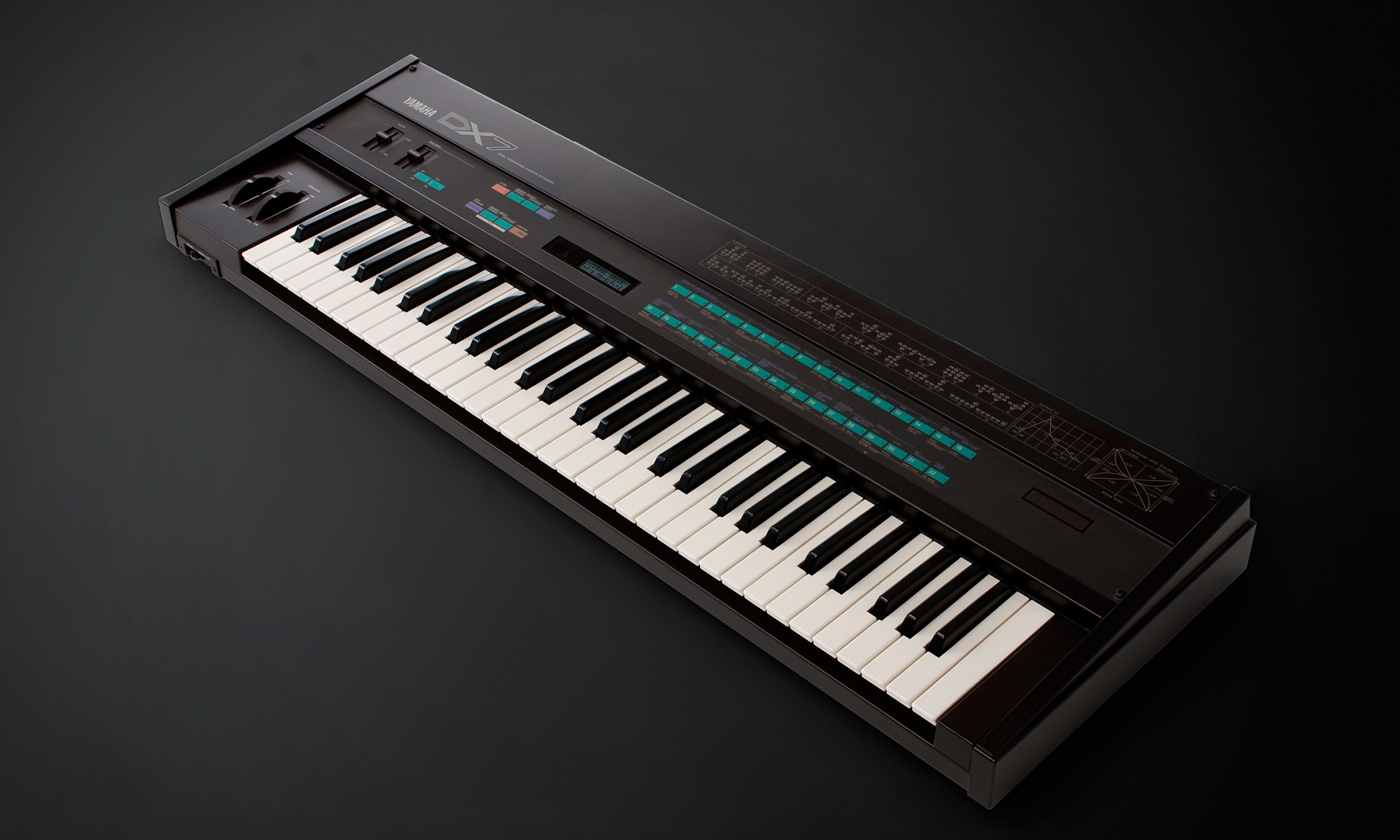
The Yamaha DX7 original product picture (picture source)
How Does it Work?
Unlike analog synths that relied on oscillators, filters and other various knobs, the DX7 was fully digital. It’s six “operators” could be combined in a total of 32 different ways to create countless complex harmonics. For musicians on stage, this meant you had more options and could wow audiences with sounds that would have been impossible to produce before. This was all thanks to the FM Synthesis design of the DX7. Analog synth counterparts would have used something called subtractive synthesis to make their sounds, where harmonics would be removed from a tone using filters.
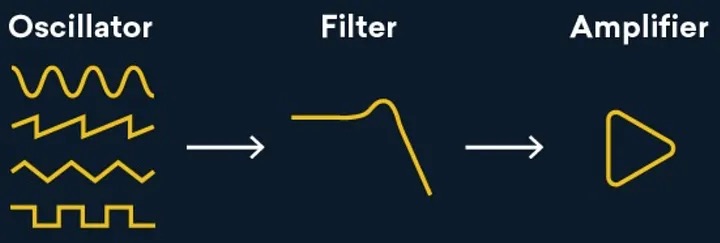
Subtractive synthesis, where harmonics would be removed from a tone using filters. (image source)
The DX7 differed in that one sound wave would instead be used to shape another. In practice, this meant that the DX7 was capable of creating sounds and tones that were more complex, detailed and nuanced than their analog counterparts. It even became possible to create percussive tones that at the time felt shockingly realistic. Take Harold Faltermeyer’s “Axel F”, which has a synthesised marimba section.
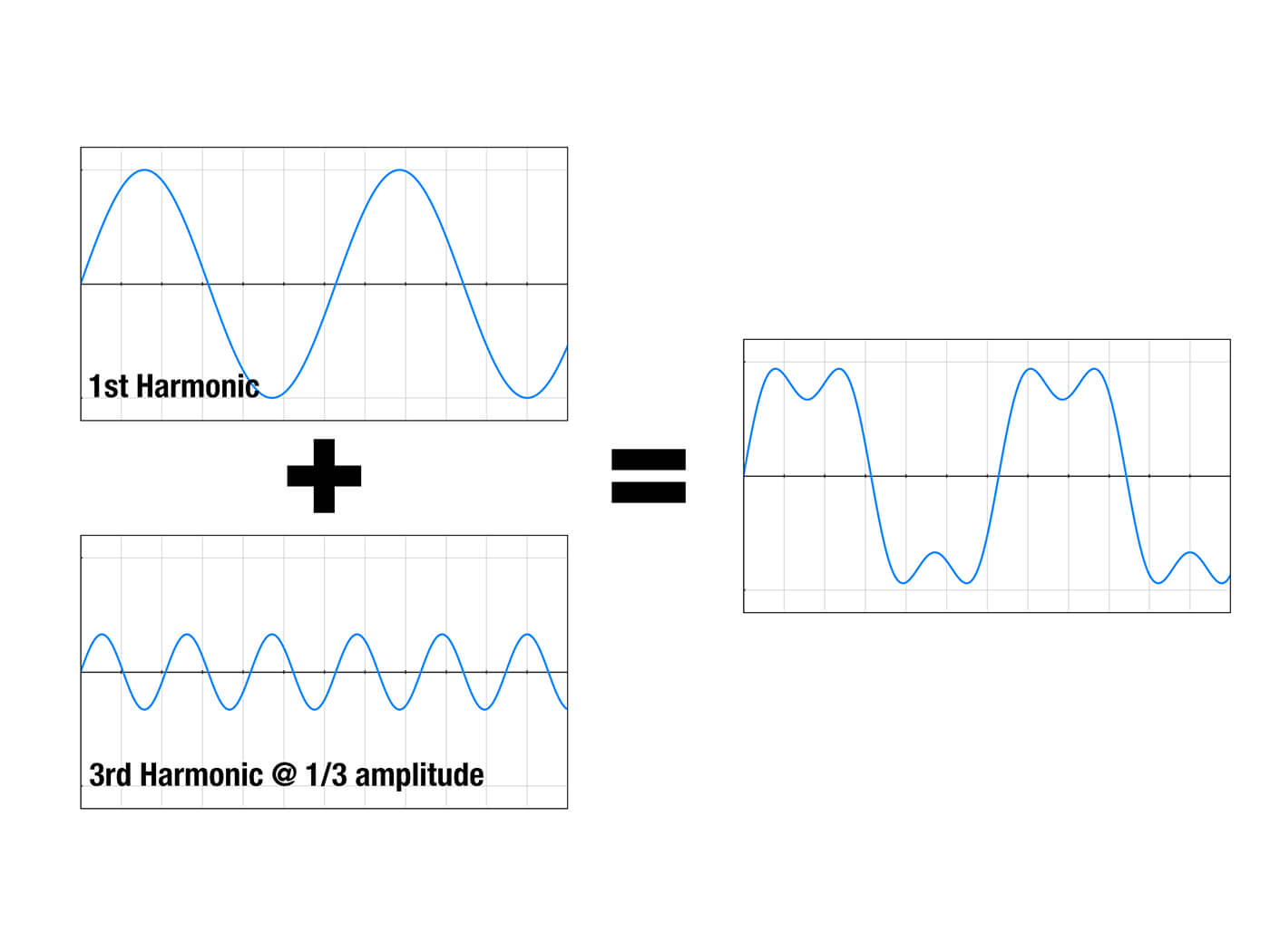
FM synthesis explained visually (picture source)
Standing Apart From The Pack:
At the time, analog synths like the Roland Jupiter-8 and the Prophet-5 were the kings of the jungle. They were rich, warm, and unmistakably “synthy”. The DX7 arrived like an alien visitor, clean, digital, reliable. A completely different beast, not to mention notoriously difficult to use. Thanks to the rather small user interface and introduction of FM Synthesis, many found it hard to adapt to the synth, opting first to stick to presets rather than make their own. In spite of this challenge, however, it quickly found its place. Not in the stead of these synth powerhouses, but alongside them, with its unique tone helping it to stand apart. Suddenly, producers had two worlds at their fingertips: The warmth and beautiful irregularity of analog and now the clarity of digital. A combination which became the signature of countless hit records.
Modern Features:
While the DX7 certainly wasn’t the first programmable synth, it did offer the ability to load and save sounds onto cartridges, which, to this point, was far from mainstream. This revolutionised workflows, allowing people to not only recall sounds fast and reliably, making live shows more exciting and varied, but also save entire banks of up to 32 sounds per cartridge and easily share them with others. Brian Eno famously published his favourite patches in Keyboard Magazine in 1987, a copy of which can be found below. Given the time that this synth was released, the versatility was astounding, offering people something which hitherto hadn’t been nearly as practical or easy to do. Imagine now the difference between saving a Word document on your computer versus rewriting the same document in order to read it again.
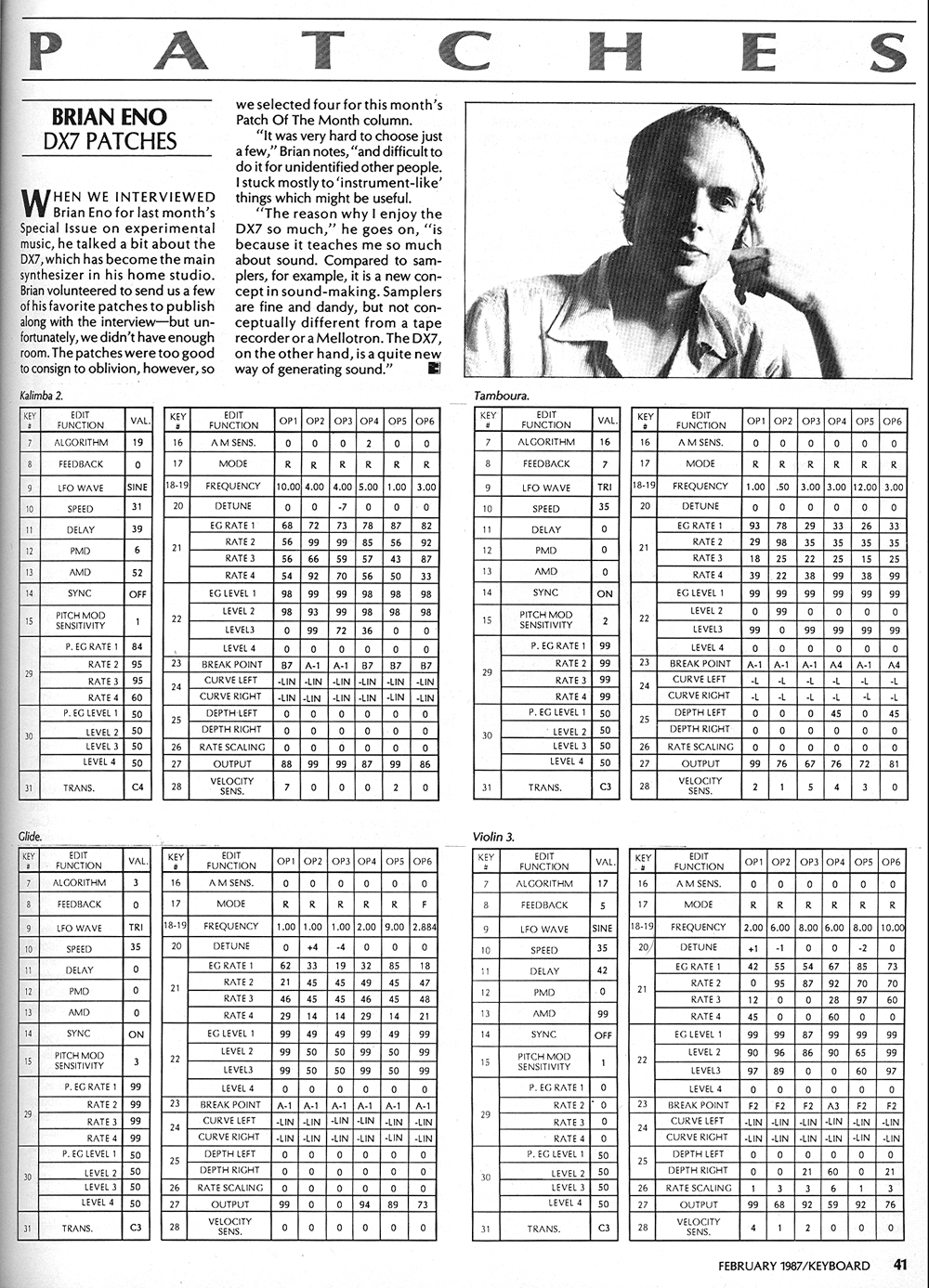
Brian Eno Patches for DX7 from Keyboard Magazine 1987
Famous Sounds:
It wouldn’t be appropriate to talk about the impact of the DX7 without identifying its digital signature, found everywhere within the hits of the 80s. One of the most popular sounds was the electric piano, which became the foundation of more 80s ballads than hair on Rick Rubin’s beard. Take, for example, Whitney Houston, who used the sound on many hit records, including “Didn’t We Almost Have It All”, or even Rick Astley with “Never Gonna Give You Up”. It wasn’t just bright piano sounds that the DX7 was known for. The synth became synonymous with 80s basslines, such as in Kenny Loggins’ “Danger Zone” or Berlin’s iconic “Take My Breath Away”. Both featured in another 80s classic, “Top Gun”. If you’re interested in finding out whether your favourite 80s classic also used the DX7, you can click here, or if you just want to see the extent to which the electric piano preset was used, you can click here
The Family Tree:
The original DX7 was just the start. Yamaha quickly followed with new versions:
- 1984, The TX7 – A cheaper rackmount option ideal for saving space and for layering multiple sounds with polyphonic playback.
- 1985, The DX21 – A more affordable performance-focused synth with 4 operators instead of the standard 6.
- 1985, The DX100 – A similar but more beginner-friendly variant of the DX21
- 1986, The DX7II – With more memory and improved MIDI features.
Each one iterated on and spread FM synthesis further into the musical mainstream, highlighting just how versatile the technology really was.
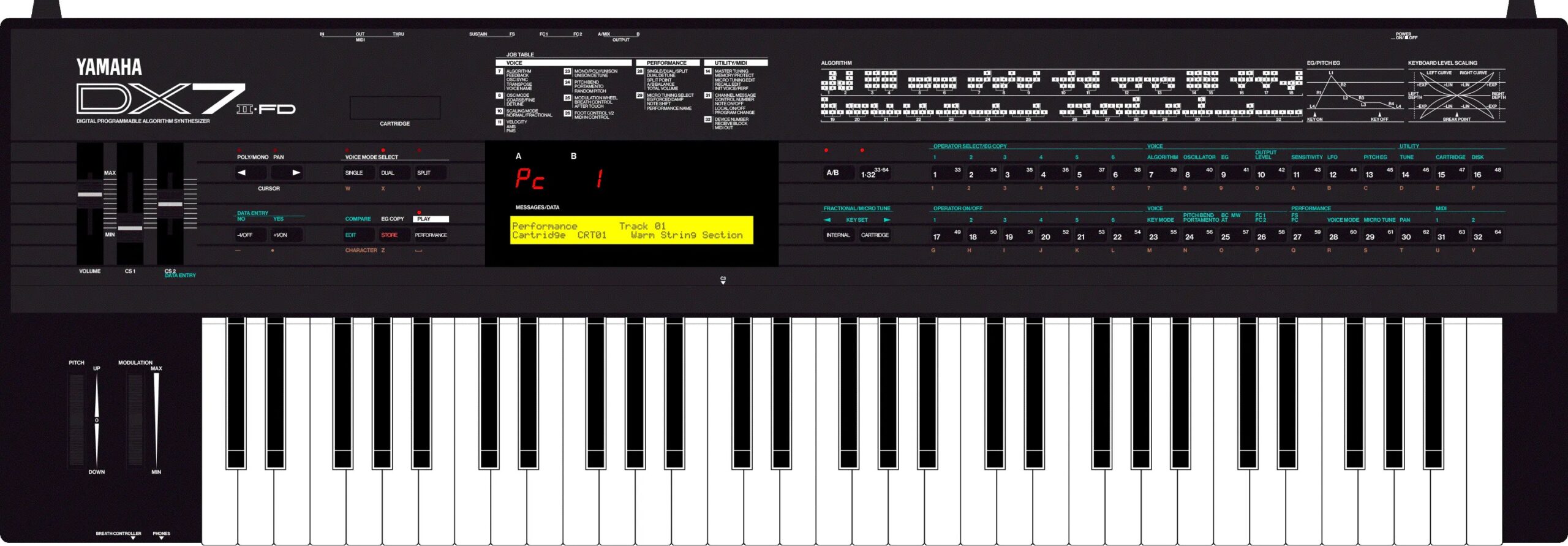
1986, The DX7II – With more memory and improved MIDI features.
Why the DX7 Still Matters:
Fast forward to today, and the DX7 is still making waves. Vintage units are affordable and plentiful (you can find one for roughly $300), making them a tempting choice for musicians looking to add an authentic 80s character to their music. Software versions like Arturia’s DX7 V or Native Instruments FM8, make the technology even more approachable, allowing anyone to pick up a demo and start playing around with it. In genres like Synthwave, Lo-Fi, Indie Pop, and even modern R&B, producers are rediscovering the DX7’s charm, including the likes of Tame Impala and The Weeknd.
For anyone interested in sound design or production, digging into FM Synthesis will offer countless new words and phrases for your musical dictionary. It teaches you not just how sounds are made, but why they continue to have a hold on us, even 60 years later.
Conclusion:
Although production for the DX7 ended in 1989, at the end of the decade that it had defined, it’s safe to say that its impact can still be felt today. In addition to FM synthesis still being widely used, and modern features such as the saving and loading of presets being nothing more than an expectation now, the DX7 continues to have its DNA intertwined in modern music, calling back not only to a time of electronic experimentation and nostalgia but also pushing its sphere of influence into the future, solidifying its status as a classic synth.
Other famous songs:
- Take On Me – A Ha – Bell synth layers – https://www.youtube.com/watch?v=djV11Xbc914
- Toto – Africa – Mallets – https://www.youtube.com/watch?v=FTQbiNvZqaY&list=RDFTQbiNvZqaY&start_radio=1
- Phil Collins – One More Night – E piano – https://www.youtube.com/watch?v=zKVq-P3z5Vg&list=RDzKVq-P3z5Vg&start_radio=1
- Madonna – Like A Virgin – Baseline – https://www.youtube.com/watch?v=s__rX_WL100&list=RDs__rX_WL100&start_radio=1
- An Ending (Ascent) – Brian Eno – Pads – https://www.youtube.com/watch?v=OlaTeXX3uH8
- When Doves Cry – Prince – Keys – https://www.youtube.com/watch?v=UG3VcCAlUgE&list=RDUG3VcCAlUgE&start_radio=1
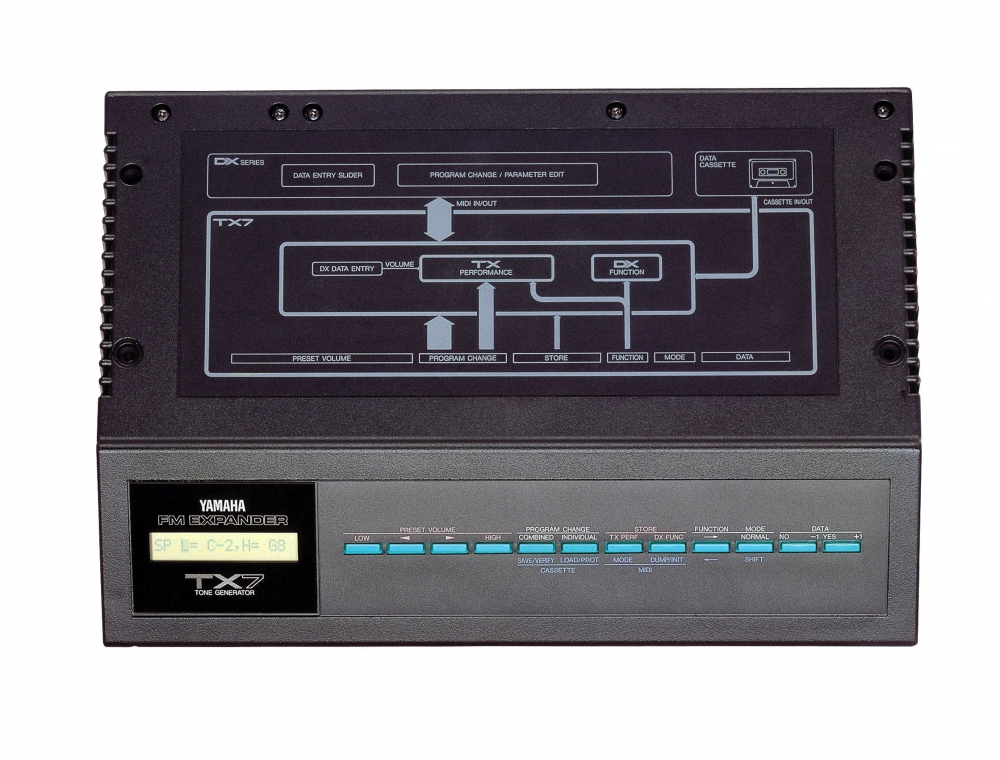
1984, The TX7 – A cheaper rackmount option ideal for saving space and for layering multiple sounds with polyphonic playback.
Links in article:
- Axel F – https://www.youtube.com/watch?v=L2cstHtZ4gQ
- Didn’t We Almost Have It All – https://www.youtube.com/watch?v=TZbbiLN71qk&list=RDTZbbiLN71qk&start_radio=1
- Never Gonna Give You Up – https://www.youtube.com/watch?v=dQw4w9WgXcQ&list=RDdQw4w9WgXcQ&start_radio=1
- Danger Zone – https://www.youtube.com/watch?v=siwpn14IE7E&list=RDsiwpn14IE7E&start_radio=1
- Take My Breath Away – https://www.youtube.com/watch?v=Bx51eegLTY8&list=RDBx51eegLTY8&start_radio=1
- List of DX7 songs – https://dx7int.matteomarossa.net
- E piano preset list – https://bobbyblues.recup.ch/yamaha_dx7/dx7_examples_elpiano.html
- Yamaha Tech Design – https://www.yamaha.com/en/tech-design/design/synapses/id_009
- MusicTech How FM works – https://musictech.com/guides/essential-guide/how-fm-synthesis-works/
Read more: https://abbeyroadinstitute.com/miami/blog/classic-keys-the-wurlitzer-electronic-piano/
Note: We’ve done our best to include and credit all original sources in this article. If you believe anything has been missed, please don’t hesitate to get in touch! We’re happy to review and make any necessary updates.
